Farm Gate and Fence Checklist: 6 Checks for Fall Chores
October 7, 2026 · Rice Ranch
A gate that takes two tries to close can become a daily chore problem. Before wet ground and cold mornings make maintenance less comfortable, walk your animal-care route in daylight. Look at the fence line, the gate itself and the way you reach feed, water and shelter. Bring a notebook or use a short note on your phone so the walk ends with a repair list you can act on.
This is an inspection routine for an existing enclosure. The correct fence design depends on the species, animals and property. Keep those requirements in view when deciding whether a repair is adequate. The checklist describes work readers can plan; it does not report completed fence or housing work at Rice Ranch.
Original Rice Ranch property photo at sunset. It provides ranch context; it is not evidence of an inspected fence or completed winter housing.
1. Choose one route and walk its full boundary
Start with the enclosure used for today's chores. Walk its entire perimeter rather than checking only the gate you use most. Penn State Extension recommends perimeter walks when observing cattle areas, including checking fences, gates and dangerous debris.
Our practical way to record a finding is: location, problem, next action. “West gate: lower hinge loose; arrange repair before use” is more useful than “fix fence.” Take a photo from a position you can identify again. If the route has several gates, number them in your note so another caregiver can follow the same list.
2. Test how each gate closes
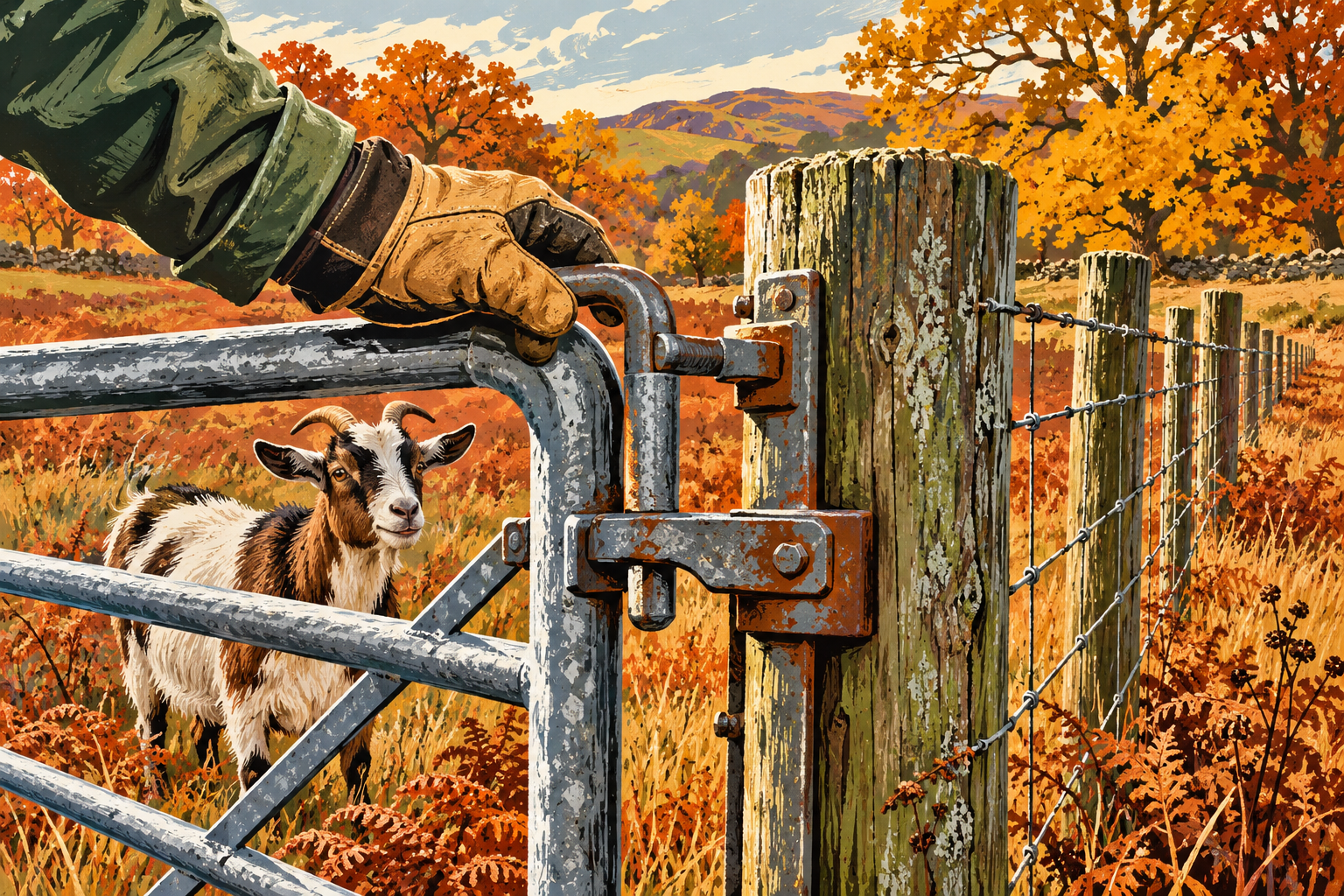
When you can test safely without releasing animals, open and close the gate and check its latch. Look at hinges, fasteners and how the gate meets the post. University of Minnesota Extension emphasizes secure gate closures and routine checks of rails, posts and gates in its horse-fencing guidance.
Put a gate that does not secure properly on the immediate repair list. Decide with the responsible caregiver how animals will remain contained while the work is done. A note is a handoff aid; it does not make an unreliable closure dependable.
3. Look for contact hazards
Inspect the animal-facing side as well as the side you walk along. Minnesota Extension warns against sharp edges and projections in horse fencing. Penn State's sheep-and-goat handling guidance likewise recommends looking for protruding objects that could cut or bruise an animal.
Record the exact part that needs attention rather than reaching into an unfamiliar assembly. Use the installation instructions or a qualified repairer for a fix beyond your skills. For electric fencing, follow the manufacturer's testing and isolation instructions; do not use your body as a tester.
4. Clear the things that do not belong
Look for loose wire, broken hardware and blown-in rubbish along the boundary and care route. Penn State's cattle guidance notes that dangerous junk can appear in animal areas even when caregivers work to keep them clean.
Choose a place for collected debris that animals cannot reach. Keep removed parts separate from repair supplies, so a discarded piece does not return to the work pile. If a finding needs another person or suitable equipment, record that dependency instead of treating the area as cleared.
5. Check access in the weather you actually get
Notice standing water, a dragging gate and places where the approach becomes difficult to use. Minnesota's horse-fencing guidance advises avoiding low gate locations where water pools. For an existing gate, write down the access problem before choosing a remedy.
Think through the next chore: carrying water, moving feed or reaching a latch with the light available. Review the route after rain or a weather change. A clear photograph on a dry day is useful context, but it cannot show how that approach behaves in every condition.
6. Leave one accountable repair list
Finish with three headings: needs attention before use, scheduled repair, and recheck. For every unfinished item, add who will handle it and when it will be checked again. Record completed work only after the gate or fence has actually been rechecked.
Keep the note where the next caregiver can find it. At the next walk, review unresolved items first and add new findings. This turns a seasonal inspection into continuity for everyday care, rather than another forgotten list.
Quick checklist to keep with your chores
Full perimeter walked; gates and closures checked; contact hazards recorded; loose debris addressed; access route reviewed; each unfinished repair has an owner and recheck date.
Follow Rice Ranch's winter-housing work
Safe homes and everyday care guide Rice Ranch's mission. The winter-housing page explains the current campaign and one-time gift options. Donations to Rice Ranch are not tax deductible. You can also use our winter chicken-coop checklist for a separate shelter and water review.
Sources
Reviewed October 7, 2026. This original inspection workflow draws on University of Minnesota Extension's Horse fencing considerations (reviewed 2021), Penn State Extension's Observing Beef Cattle Pastures and Pens, and Designing an Efficient Handling System for Sheep and Goats. Species-specific guidance belongs with the relevant animals; local Extension can help with an enclosure you are unsure about.
University of Minnesota Extension: Horse fencing considerations
Penn State Extension: Observing Beef Cattle Pastures and Pens
Penn State Extension: Designing an Efficient Handling System for Sheep and Goats