Winter Chicken Coop Checklist: 5 Checks Before the First Freeze
October 6, 2026 · Rice Ranch
A winter chicken coop needs to keep birds dry, give damp air a way out and keep drinking water available. Before cold weather settles in, walk through the shelter in daylight and write down the repairs you can finish now. A small checklist is easier to use than a shopping list full of equipment you may not need.
This guide is for an established flock of adult chickens. Chicks and birds with special care needs require their own housing plan. It describes checks readers can make at home; it does not claim Rice Ranch has completed its winter housing.
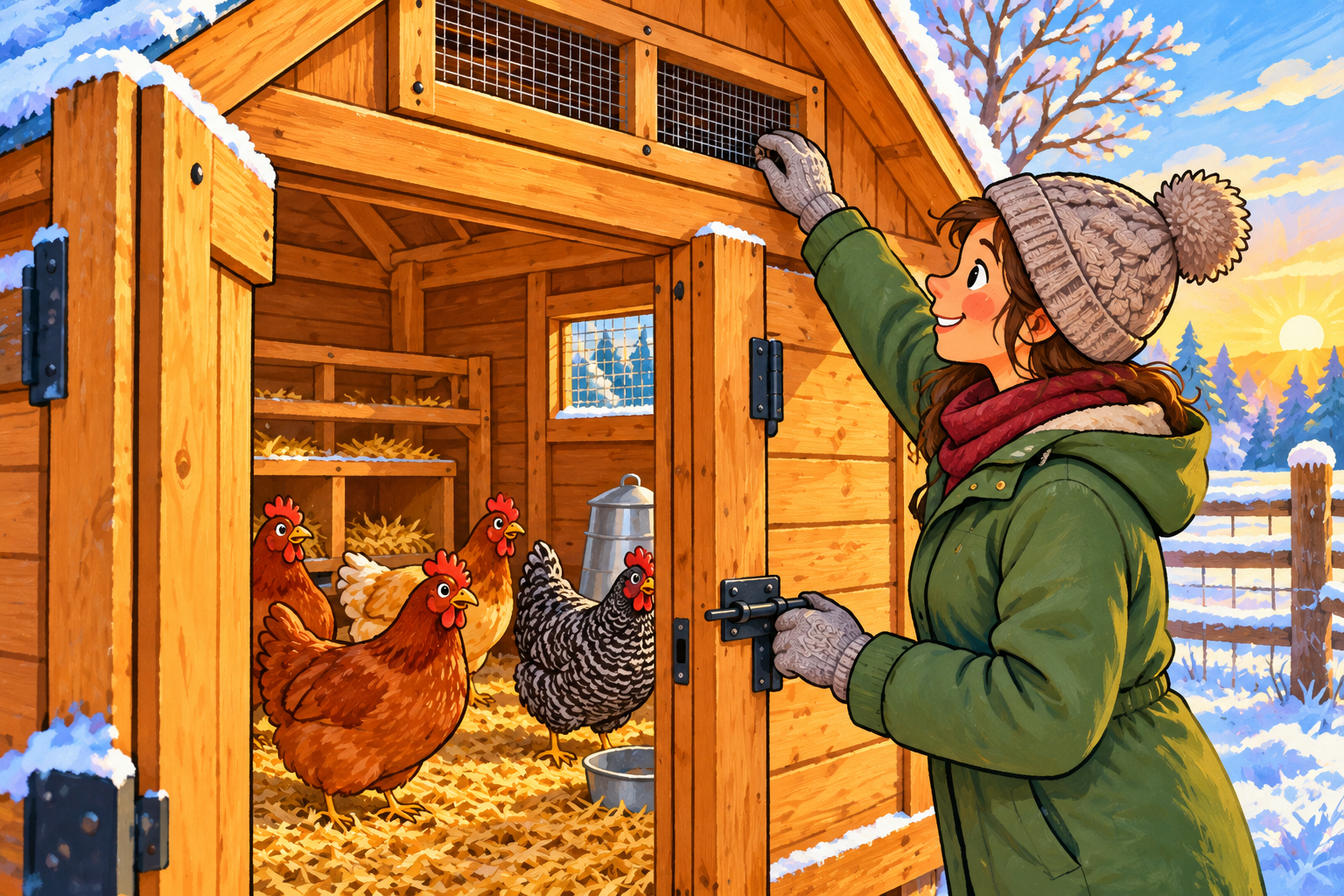
Original Rice Ranch property photo. This image provides ranch context; it is not a photo of a chicken coop or completed winter housing.
1. Follow the water before adding more bedding
Check the roof, corners and ground around the coop after rain. Look for drips, damp patches and places where runoff reaches the doorway. Maryland Extension recommends repairing roof leaks before winter. Fresh bedding cannot solve a leak that keeps soaking the same spot.
Write down the source of each wet area: weather, a spilling waterer or another cause. Fix the source, then remove wet material. Keep the doorway and your normal route to feed and water clear enough to use during bad weather.
2. Keep airflow, but move it away from resting birds
Closing every opening can trap moisture. Utah State University Extension explains that winter air exchange needs both an entry and an exit for moisture-laden air. Illinois Extension distinguishes useful ventilation from drafts blowing directly across the birds.
Inspect the openings and the resting area together. Check whether the air path reaches the perch directly. Repair unintended gaps at bird level while preserving the ventilation the building needs. After a change, recheck the coop instead of assuming more sealing always improves it. Ask your local Extension poultry specialist to assess a layout you are unsure about.
3. Make an unfrozen-water plan that fits your property
Frozen water is unavailable to chickens. Maryland Extension advises checking and replacing it several times a day. Decide who will make those checks, where replacement water will come from and how you will carry it safely.
On a property without reliable electricity, keep a spare water container ready to swap and check often enough to maintain access. Sunlight may help in the daytime, but it is not proof that water will remain liquid overnight. If you already use a suitable heated waterer, follow its instructions and check the container, cable and connections. Illinois Extension recommends keeping electrical cords out of birds' reach and off the floor. Check for spills too.
4. Check the resting area and secure the doors
Inspect perches, nesting areas, doors, windows and latches while you can still repair them comfortably. Maryland Extension recommends wooden perches and keeping them away from positions above food or water. Illinois Extension advises securing doors and windows against predators and vermin.
Remove accumulated waste from the areas that need cleaning. Close and reopen each latch yourself. A door that sticks in mild weather deserves attention before you depend on it during a cold morning. Put small repairs on a dated list so they do not disappear among larger projects.
5. Prepare tomorrow's chores tonight
Set out the tools you actually use: water containers, your regular feed, dry bedding and a light for checking the shelter. Keep feed available and observe whether every bird can reach it. Cold-weather feed needs can increase; Maryland Extension advises keeping feed accessible rather than relying on treats.
If you are considering supplemental heat, first review the housing and the needs of the birds. Heating equipment introduces a separate fire and electrical-safety problem. Have an appropriate poultry specialist or qualified installer help with a setup you cannot assess safely.
A checklist to keep by the door
Roof and runoff checked; leak repairs written down.
Damp bedding removed and the source of moisture addressed.
Ventilation remains open; unintended drafts at the perch checked.
Liquid water and regular feed accessible; next water check assigned.
Perches, doors and latches checked.
Supplies ready and tomorrow's unfinished repair chosen.
Repeat the checks after a weather change. Take a dated photo of a repair and note what still needs work. That simple record helps the next person caring for the flock pick up where you left off.
Follow Rice Ranch's winter-housing work
Safe shelter is part of Rice Ranch's animal-care mission. Visit the winter-housing page for the current campaign and ways to support the animals. Donations to Rice Ranch are not tax deductible. You can also read our story to learn about the ranch's direction.
Sources
Reviewed October 6, 2026. This original checklist draws on Utah State University Extension's *Housing Backyard Chickens* (June 2008), Illinois Extension's *How to care for backyard chickens in winter* (December 12, 2020), and University of Maryland Extension's *Winter Weather and Small Flocks: What You Need to Know* (updated January 27, 2023). Use local advice for your building, weather and flock.
Visit the winter-housing campaign
Utah State University Extension: Housing Backyard Chickens
Illinois Extension: How to care for backyard chickens in winter