Poultry Feed Storage: A Small-Space Checklist
October 7, 2026 · Rice Ranch
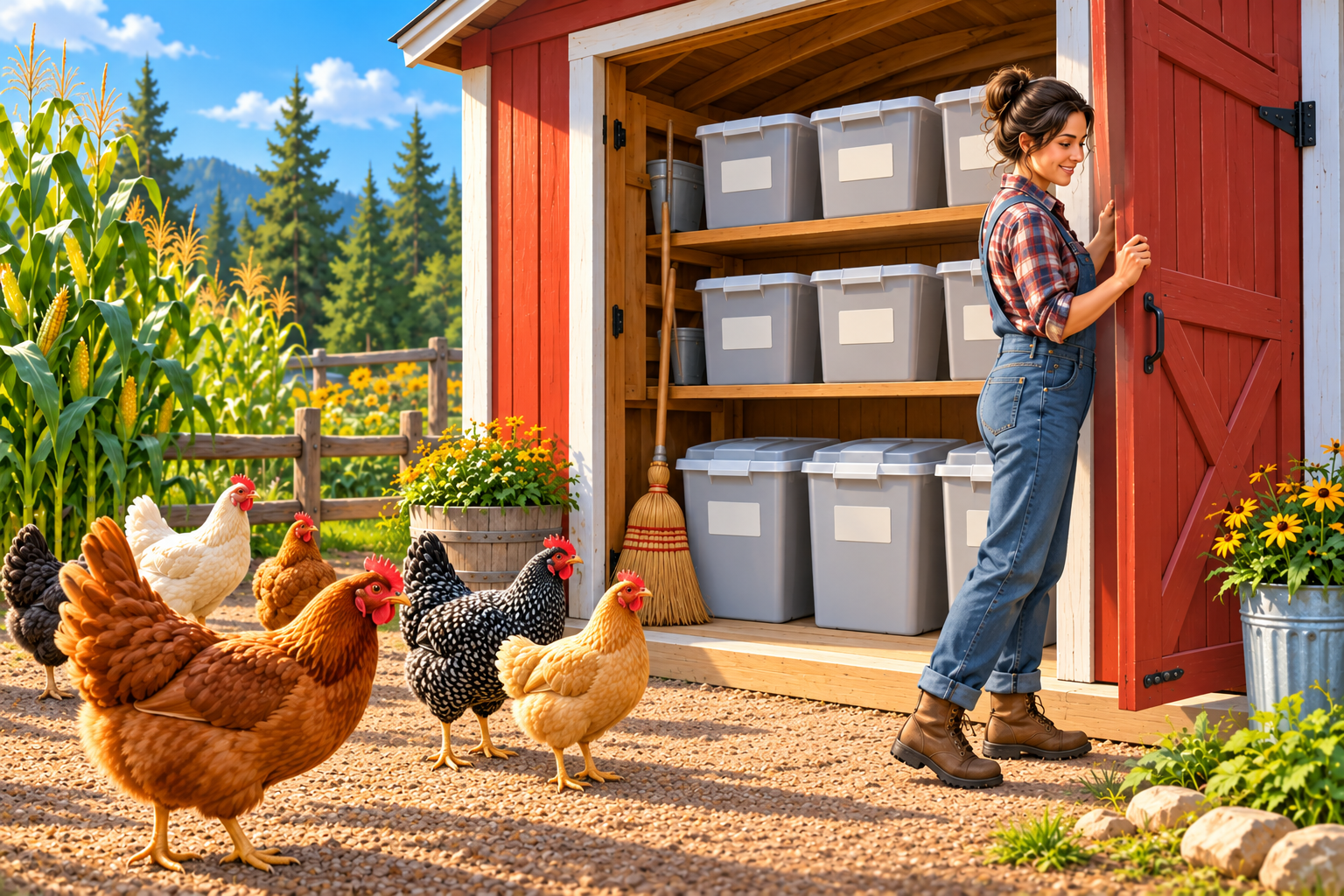
Poultry feed storage works best when the correct feed is easy to identify, containers close properly, and spills are easy to clean. Before buying another storage bin, inspect the space you already use. A simple routine can reveal whether the problem is the container, the location or the way each feeding round ends.
Keep the feed identifiable
Retain the original feed information, including the product label and any lot or date details. If feed goes into another container, keep that information with it. Separate feeds that have different intended animals or life stages. A plain bin without a label can make the wrong feed look like the right one.
Write a clear opened date rather than guessing how long a bag has been in use. Follow the feed manufacturer's storage and use instructions. This checklist does not establish a universal shelf life for every feed.
Check the container and its location
USDA APHIS recommends storing feed and fresh litter in closed containers or buildings to help prevent contamination, keeping bagged feed above the floor, and addressing rodents. Walk around the container after it is filled. Does its lid close? Is the surrounding area dry? Can you see the floor and the edge behind the bin?
Avoid treating a closed lid as proof that everything inside is sound. Moisture, damage or an unusual appearance needs attention. Set suspect feed aside from the active feeding routine and ask the supplier or an appropriate animal-care professional how to handle it.
Make cleanup part of feeding
Keep the tool for clearing spills nearby. Finish a feeding round by checking the storage floor and closing the container. USDA's wildlife guidance specifically highlights spilled feed as something to remove. Assigning that small step to the person who feeds makes the next person's inspection easier.
Store the scoop so its identity and location stay clear. If different feeds require different tools under your care plan, label them. A tidy shelf helps only when it preserves the distinction that matters.
Use a short weekly check
Review labels, lids, signs of moisture, damage, spills and the supply needed for the next normal round. Record a problem with a next action: “Lid no longer seats correctly — replace container before next refill.” That is more useful than “storage messy.” Do not write that a repair is finished until the replacement or repair has actually been checked.
Should I mix new feed into an unidentified remainder?
Resolve the identity and condition of the remainder first. Keeping the label and dates with each supply makes that decision less uncertain.
What should I buy first?
Identify the actual problem before choosing equipment. You may need a readable label, a better lid or a different location rather than a larger collection of bins.
Read the Rice Ranch blog for related chore and winter-preparation guides. This is general storage planning, not a claim of a particular feed-storage installation at the ranch.
Explore more Rice Ranch articles