A Backyard Flock Biosecurity Routine You Can Explain Clearly
October 7, 2026 · Rice Ranch
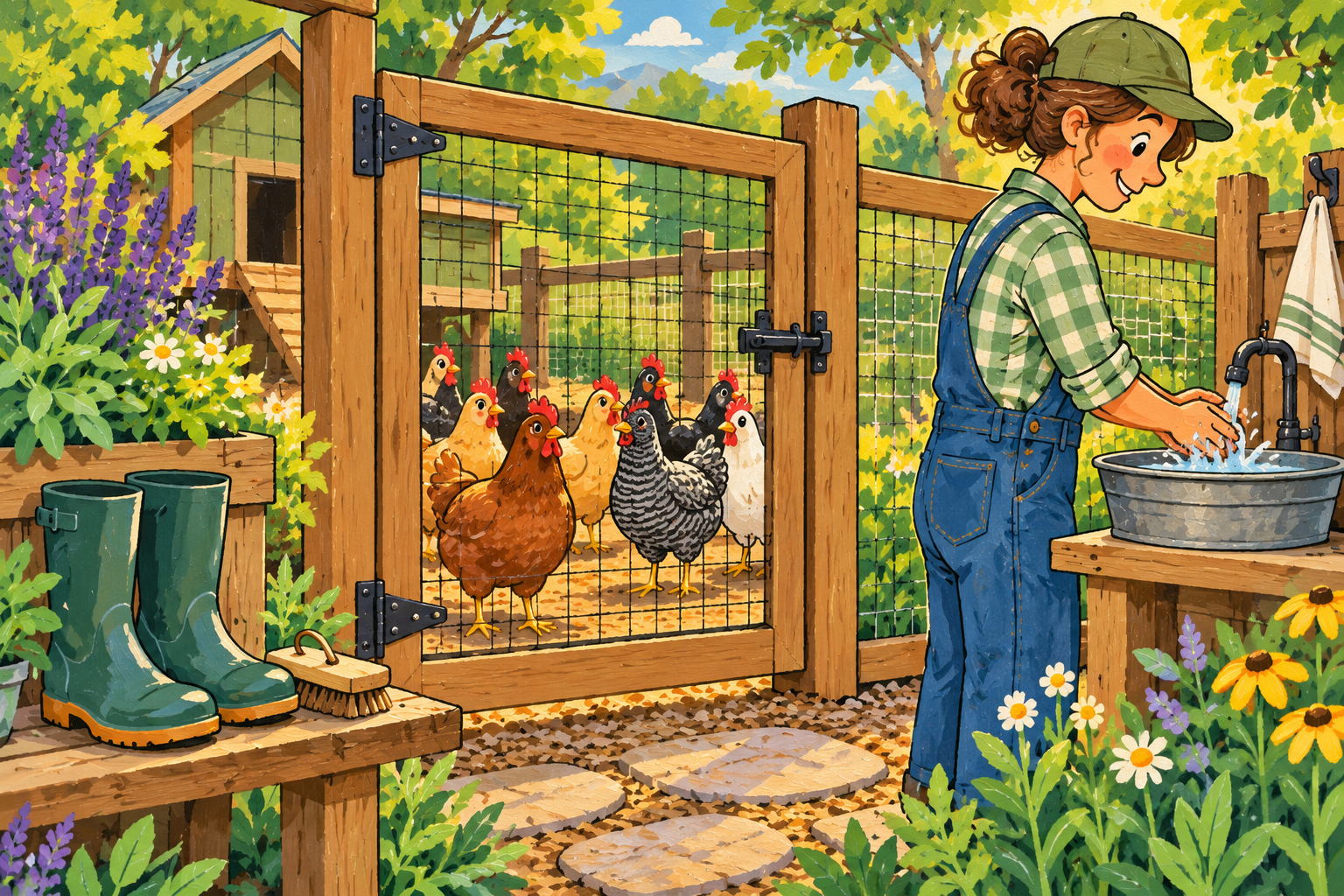
A backyard flock biosecurity routine should be clear enough for the next caregiver to explain. Rather than start with a complicated chart, draw the boundary between ordinary household activity and the area used to care for birds. Then decide what needs to happen when someone crosses it.
Name the boundary
Choose a recognizable entry point and describe it in plain language. Tell everyone where bird-care equipment belongs and where clean supplies are kept. A visitor should not have to guess whether a gate, path or storage corner is part of the bird area.
USDA APHIS describes biosecurity as routines that reduce the chance of pathogens entering or spreading through a flock. Its current guidance highlights controlling visitors and clothing, protecting birds from wildlife, and maintaining clean habits. Those principles are the starting point; adapt the details with your local poultry or veterinary adviser.
Make entry a repeatable sequence
Write the agreed footwear and clothing rule, the handwashing step, and the tool rule in the order they happen. Put the supplies where the rule is followed. If the wash station or designated footwear is somewhere else, the written instruction and the real route are working against each other.
For equipment cleaning and disinfection, use the appropriate product directions and professional guidance. Do not invent a dilution, mixing recipe or waiting time. A sign can point to the current instructions without squeezing every technical detail into a few words.
Explain visits before arrival
Limit visits to the bird area to the people who need to enter. Tell an authorized visitor what they will need to do before they arrive. If someone is only dropping something off, arrange a location outside the care area when that fits your operation.
Give each caregiver the same version of the routine. A rule that changes according to who happens to be home is harder to follow consistently.
Include tools in the handoff
Record which tools are dedicated to the flock and what happens when equipment returns from another location. Keep storage and cleaning responsibilities visible. End each round by returning the tools to their agreed places and noting anything that could not be completed.
A fictional handoff might say: “Entry routine followed; dedicated tools returned; visitor delivery left outside the bird-care boundary.” That statement is useful only when those steps actually occurred.
How often should I review the routine?
Review it when the flock, caregivers, equipment or property layout changes. Also check current local animal-health notices when relevant; an old printed sheet is not a substitute for current advice.
Does biosecurity guarantee a healthy flock?
No routine guarantees that disease cannot occur. The aim is to reduce avoidable risks and make the agreed practices consistent. Contact a veterinarian about illness or concerning changes rather than relying on a checklist to diagnose them.
Explore the Rice Ranch blog for more practical planning around animal chores. This article is educational and does not report a completed ranch construction project.
Explore more Rice Ranch articles